HDMI ports
Console HDMI connector replacement, pad and trace assessment, filter checks, and surrounding damage repair.
Board-level electronics repair
Microscope-assisted diagnosis and repair for damaged ports, connectors, pads, traces, power rails, and board-level faults in phones, consoles, computers, and handhelds.
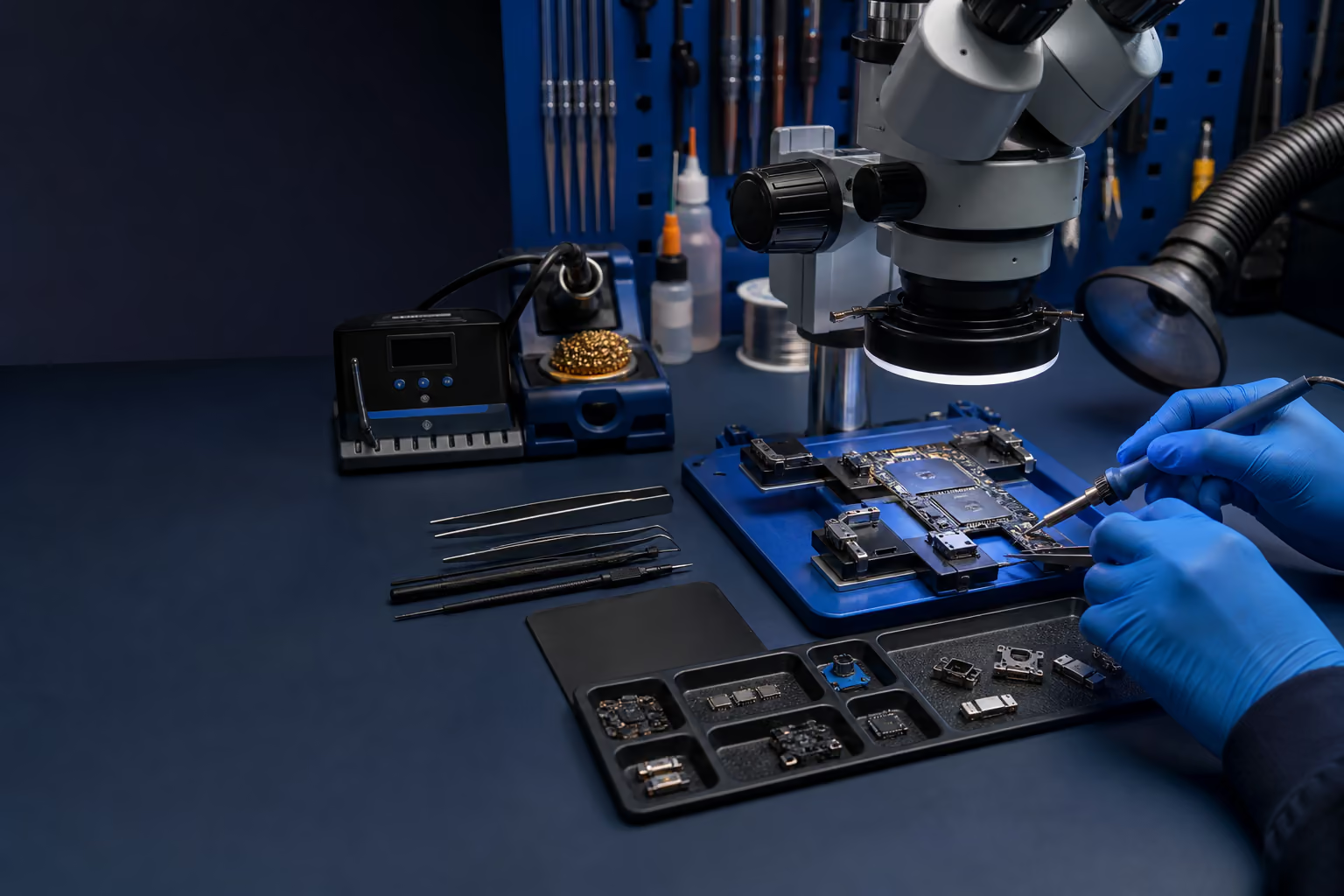
Typical board work
A port replacement is not just removing one connector. Nearby filters, pads, traces, through-holes, shielding, and power circuits can all determine whether the repair holds and the device works correctly.
Console HDMI connector replacement, pad and trace assessment, filter checks, and surrounding damage repair.
Damaged charging and data ports, connector anchors, pads, nearby components, and power-path testing.
Display, battery, camera, fan, daughterboard, and flex-cable connectors when board condition permits.
Shorted capacitors, damaged filters, coils, diodes, and other board components after diagnosis.
Lifted pads, torn traces, jumper repair, anchor restoration, and evaluation of internal-layer damage.
Short detection, rail measurements, power-sequence checks, corrosion review, and targeted component work.
Prior repair attempts
Previous rework changes the job. Excess heat, missing components, scraped solder mask, bridged pins, torn pads, damaged vias, incorrect ports, and hidden jumper wires can turn an ordinary repair into reconstruction.
Severe corrosion, internal-layer damage, missing pads, overheated chips, unavailable parts, paired components, or prior destructive work may prevent a durable repair. Diagnostic labor and attempted rework do not guarantee recovery of the device or its data.
Tell us the device, symptom, damage history, and any prior repair attempts. Repair businesses can apply for White Label board repair support.